A cash difference is often discovered only after a store closes or the next shift has started. The physical amount does not match the system, but nobody knows which transaction caused the difference. The earlier cashier has left, withdrawal notes are incomplete, and the review depends on memory.
A clear cashier shift handover defines responsibility for each working period. The purpose is not to treat employees with suspicion. It helps the store preserve transaction evidence, find mistakes sooner, and prevent small differences from carrying into the next day.
Set an opening balance for every session
Each shift should begin with a known cash amount. The amount is counted together or verified by the responsible person, then recorded in the system or on an approved form. Avoid carrying yesterday's closing amount forward without a physical count.
Some systems offer cash drawer management to record opening cash, additions, withdrawals, and the expected amount at the end of a session. Availability and behavior vary by application, subscription, hardware, and configuration.
Record every cash movement outside sales
Cash can change when small notes are added, money is removed for deposit, operating costs are covered, refunds are processed, or funds move between drawers. When these movements are communicated verbally, the system and physical amount can easily diverge.
Record every addition and withdrawal with the amount, reason, time, and responsible user. Attach evidence according to policy. A POS application should allow the business to review activity history and restrict actions by role.
Give each user a separate identity
Shared accounts make transactions difficult to trace. Apply cashier access control so each user has an individual identity and only the permissions required for the role. Voids, returns, special discounts, opening a drawer without a sale, or price changes may require additional authorization.
Review access when an employee changes duties or leaves. Do not keep adding new accounts without disabling old access. In a small store, a supervisor review and documented approval can support practical separation of duties.
Review the report before ending the shift
A cashier shift report should show sales, payment methods, expected cash, additions and withdrawals, voids, returns, discounts, and open transactions where the system supports them. The cashier reviews the report before counting the physical amount.
Handle pending transactions, offline payments, and unfinished orders according to procedure. Reported figures may change when a transaction has not synchronized or settled. Do not end a session simply to meet a deadline without understanding open items.
Count the drawer and document differences
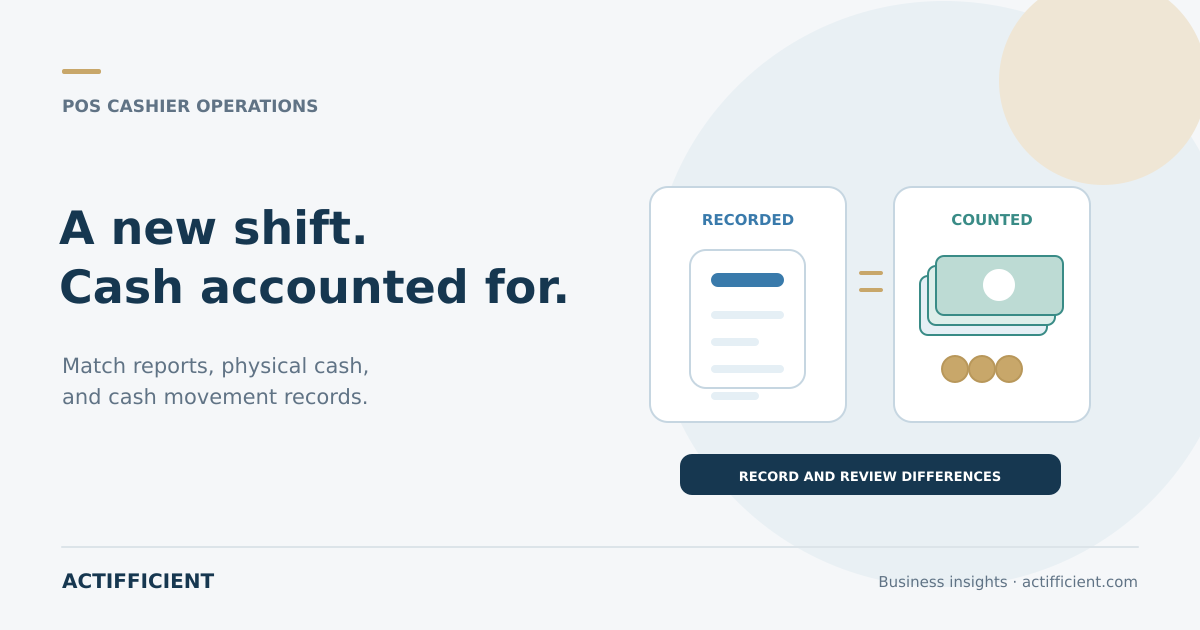
During cash drawer reconciliation, compare expected cash with the physical amount. Count by denomination so errors are easier to find. Separate the opening float from sales receipts and recorded withdrawals.
When there is a cash register discrepancy, do not alter the figure merely to force a match. Record the difference, inspect cash sales, refunds, voids, additions, withdrawals, and possible change errors. Escalate the review according to company thresholds and policy.
Keep the handover short and complete
A shift change procedure can follow a simple sequence: finish open transactions, produce the report, count cash, record any difference, prepare the deposit, confirm the next opening float, and transfer responsibility. Both employees acknowledge the condition received.
If one drawer is shared all day, define the responsibility boundary clearly. Separate sessions or drawers for each employee are easier to trace when hardware and operations allow.
Review patterns, not only one incident
A POS transaction audit can examine the frequency of differences, voids, returns, discounts, drawer openings, and corrections by user, shift, location, and time. One small difference may result from human error. A recurring pattern requires review of the process and supporting evidence.
Use the findings to improve training, opening denominations, access settings, or procedures. Do not infer a person's intent from a number alone. Transaction context and a fair review remain essential.
End the day with a clear status
Daily cashier closing confirms that all shifts are complete, cash and other payment methods are reconciled, deposits are prepared, and reports are retained. Define who can complete the day and who can reopen transactions when a correction is necessary.
Explore Actifficient's POS and operational technology portfolio to discuss transaction, reporting, access, and cash handling needs. If your business wants to test the shift flow using realistic scenarios, contact Actifficient for a consultation. Bring the number of cashiers, shifts, payment methods, devices, and current reconciliation process to make the discussion more precise.