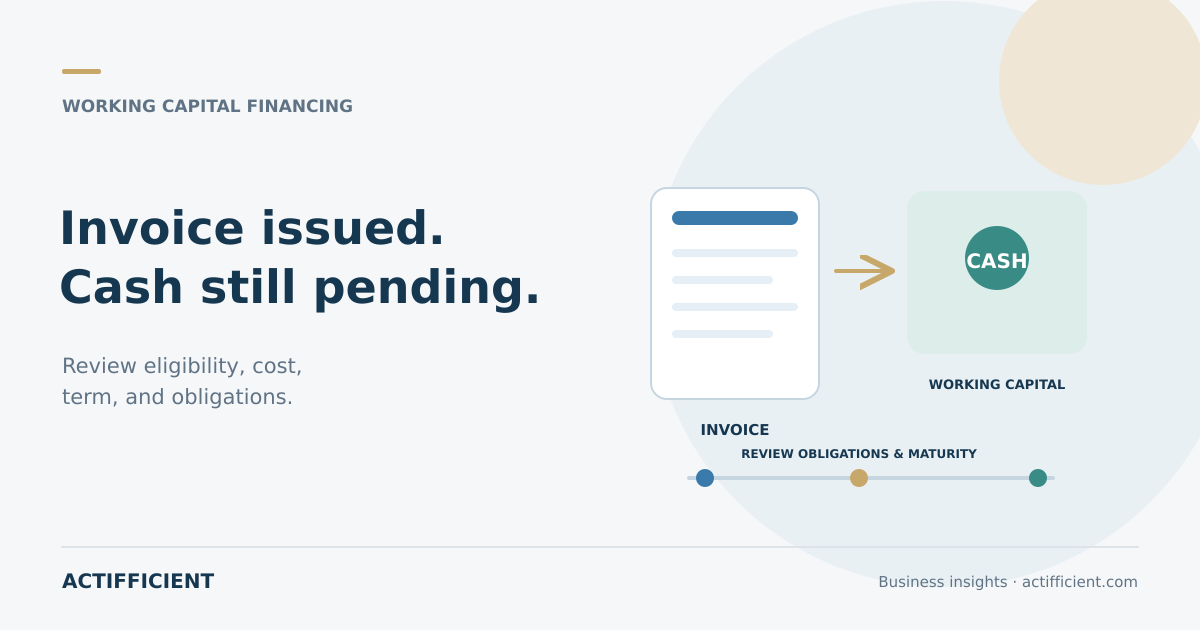
The work is complete and the invoice has been issued. The customer is not due to make payment for another sixty days, while salaries, materials, and operating costs are due this month. The business has recorded revenue, but the cash is not yet available.
Accounts receivable financing can be one option for bridging that timing gap. The business applies using an eligible invoice as an underlying document. Approval, amount, duration, cost, and repayment structure remain subject to the provider's assessment and terms.
Define the cash flow problem first
Before considering invoice financing for businesses, identify the actual reason for the shortfall. Does the customer have a long payment term, must the next project start immediately, or is collection performance consistently weak? Short term financing will not fix a disputed invoice or a customer that is unlikely to settle the bill.
Prepare a forecast through the expected payment date. Receivables cash flow should show when funds are likely to arrive, not only the total invoice value. Add a delayed payment scenario to test whether the business can still meet its obligation.
An invoice does not guarantee eligibility
A provider may examine whether the transaction is genuine, the product or service has been delivered, the customer can be verified, and the invoice is not supporting another facility. Business history, turnover, customer quality, payment behavior, and receivables concentration may also be considered.
Review invoice financing eligibility with the provider under consideration. A large invoice does not guarantee that the same amount will be approved. The available amount may be lower than the face value, and an application can be declined.
Prepare consistent transaction evidence
Financing application documents may include the invoice, contract, purchase order, delivery evidence, bank statements, financial records, legal documents, and identification required by the provider. Details across these records need to be consistent.
Differences in the customer name, value, date, or bank information can slow the review. Confirm that the invoice has not been cancelled, is not under dispute, and is not being submitted more than once. Retain customer approval when the scope or value changes.
Calculate the full cost against the benefit
The invoice financing cost should not be judged from a headline rate alone. Ask how charges are calculated and whether administration, late settlement, tax, or other fees can apply. Request a simulation showing the net funds received and the total obligation at maturity.
Compare that cost with a realistic operational benefit. When the funds support work with a very narrow margin, financing charges may materially reduce the return. Use numbers from the project or operating cycle that the facility will actually support.
Match the duration with customer payment timing
An invoice financing term should reflect the invoice due date, the customer's administrative process, and a reasonable delay scenario. Do not rely only on the contract date when the customer regularly needs several additional days to complete payment.
Clarify the settlement structure. Some facilities require full repayment at maturity, while other arrangements depend on the product. Understand who receives the customer's payment, whether the customer must be notified, and what happens if the customer is late.
Understand the risks before committing
Depending on the agreement, one of the invoice financing risks is that the business remains responsible for repayment when the customer has not yet settled the invoice. Delays may add charges and affect access to future financing.
Review security, guarantees, rights over receivables, collection terms, and data use. Involve finance and qualified contract reviewers before accepting a facility. Fast disbursement should not be the only selection factor.
Separate a temporary gap from a structural issue
Unpaid customer invoices can create a legitimate timing gap, but financing is not the only response. A business may also need stronger customer checks, clearer payment terms, scheduled collection, evidence of delivery, and a defined dispute process.
Use working capital financing for a specific and measurable purpose. Record which invoice supports the facility, how funds will be used, when the obligation matures, and who monitors customer payment. This discipline reduces the risk of using short term funding to cover recurring operating losses.
Actifficient helps businesses discuss working capital needs and suitable options through its business financing solution. If your company wants to assess invoice readiness and initial documents without assuming approval, contact Actifficient for a consultation. Bring sample invoices, customer terms, a cash forecast, and the intended use of funds to make the discussion more focused.