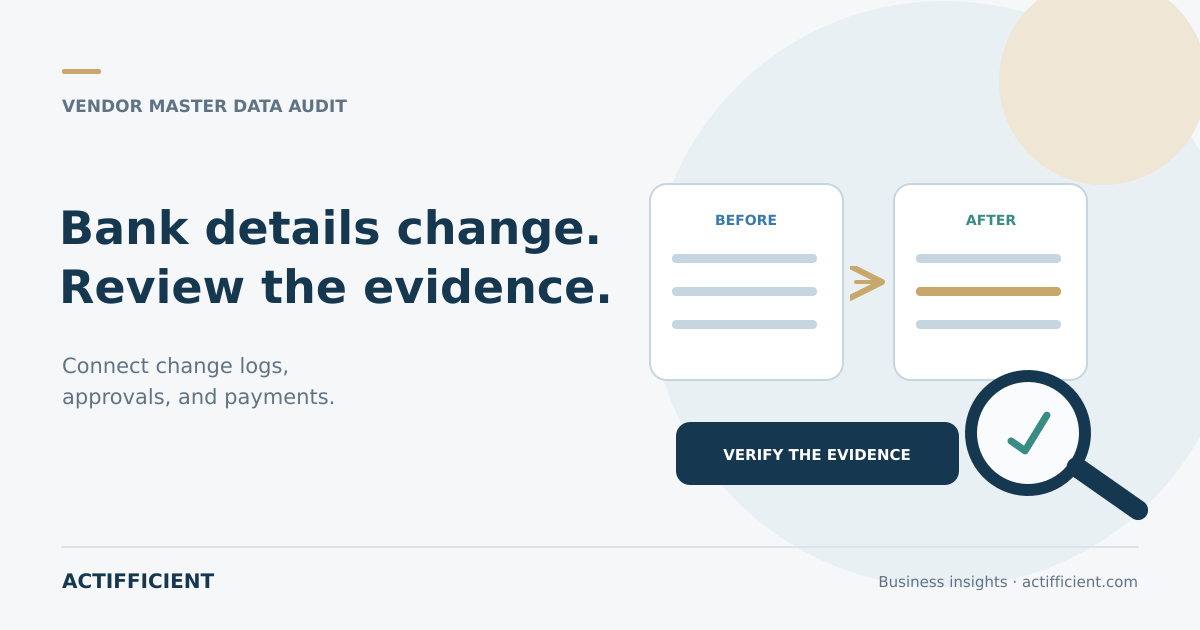
A vendor bank account is updated late in the afternoon. The next morning, a large payment is processed to the new account. The change may be legitimate because the vendor moved banks, but the timing and value make the transaction worth reviewing before anyone reaches a conclusion.
Vendor bank account changes are master data events that should have evidence, authorization, and a traceable time. Data analysis can identify updates close to payment, repeated changes, or patterns that differ from normal activity. The result is a review queue, not an allegation against a vendor or employee.
Begin with a specific risk question
A broad rule creates too many alerts. Define the scenario, such as bank details changed shortly before payment, one user changing many vendors, or an old account being restored after a transaction.
A vendor master data audit should identify which fields matter, including account number, account holder, bank, branch, country code, payment method, and vendor status. Reviewers also need to know whether a change came from the main application, an integration, or a data migration.
Connect change logs with payments
Useful data normally includes vendor identity, old and new values, change time, user, source, approval time, and transactions after the update. Payment transaction analysis then connects those records to invoices, amount, due date, and destination account.
Do not rely only on the current master record. Without history, a reviewer cannot know which account was active when payment was prepared. Data change monitoring requires logs that preserve what changed, who changed it, and when.
Combine several indicators
One indicator rarely provides enough context. A new account can be valid, a large payment can be routine, and an after hours update may reflect a time zone difference. Risk increases when several conditions appear together.
For example, the update was made by a user who rarely maintains vendors, approval is missing, payment follows quickly, and the same account appears on another vendor. This combination supports payment anomaly detection more effectively than a rule based only on value.
Examine shared bank details
Vendor data analysis can identify one account used by several vendors, similar account holder names, repeated reversals, or accounts that were previously inactive. A match is not automatically improper. Related companies, collection agents, or shared service providers may have a valid explanation.
Add country, corporate group, vendor category, and ownership information when available. These attributes help reviewers distinguish expected relationships from cases that require confirmation.
Evaluate controls before judging individuals
Bank account change controls may include separation of duties, two level approval, verification through a known vendor contact, restricted permissions, and a waiting period before new details become usable. The design depends on the company's risk and systems.
When one person can create a vendor, update bank details, and process payment, the first issue is access design. A review should not stop at one transaction when the control weakness affects a broader population.
Use AI to support exploration
AI Data Analytics can help users formulate questions, connect authorized sources, group patterns, and suggest additional tests. It can also help explain why a case received a higher review priority.
AI will not know that a change was verified through a trusted call or formal letter when that evidence is outside the data. Decisions still require documentation, confirmation, and human judgment.
Prioritize by impact and evidence
Audit review prioritization can consider payment value, time from change, vendors sharing an account, user permissions, approval status, and exception history. Test the weighting so the queue is not dominated by a single factor.
Review false positives and refine the logic. When too many valid cases appear, add context. When an important event is missed, reassess data sources, time windows, and thresholds.
Do not infer fraud from a pattern alone
Vendor fraud risk requires careful handling. A data pattern only identifies a condition for review. Supporting evidence may include a change request, approval, vendor confirmation, communication history, contract, invoice, and destination account information.
Retain the outcome, closure reason, and control improvement. That history supports later analysis and prevents repeated reviews without a clear reason.
Explore Actifficient's AI Data Analytics solution to analyze authorized master data changes and transactions. If your team wants to test this scenario with a safe sample, contact Actifficient for a consultation. Prepare the log structure, vendor list, payment data, and approval rules so the initial scope can be assessed clearly.