An employee takes a three day business trip. The hotel is charged to a personal card, meals are covered through a daily allowance, and a personal vehicle is used to reach the customer. When the claim arrives, the manager and finance team disagree about the evidence and calculation method.
Confusion in business travel reimbursement often appears when a company uses several methods without defining their boundaries. Actual costs, per diem, and mileage are calculated differently. A useful policy explains when each method applies and whether they can be combined.
Actual reimbursement follows the cost incurred
With actual cost reimbursement, the employee submits the amount genuinely spent for an authorized business purpose. Examples may include a hotel, public transport, parking, or another approved item. The claim usually includes evidence, date, business purpose, category, and supporting information required by policy.
The company needs clear price limits, eligible categories, currency rules, and a process for missing documentation. Employees should not discover these rules only after returning. Written guidance helps them retain the right information from the beginning.
Per diem uses a predetermined daily amount
A per diem policy provides a daily amount for defined travel needs. It may cover meals, incidental costs, or other components specified by the company. Rates can vary by city, country, trip length, or employee level according to policy.
A daily travel allowance reduces the need to submit every small purchase separately when the rules do not require it. The company still needs to explain departure and return days, partial days, meals already provided, cancelled travel, and any destination based differences.
Mileage is different from a fuel receipt
When an employee uses a personal vehicle for business, mileage reimbursement may be calculated from distance and an approved rate. A record can include the date, purpose, starting point, destination, distance, and related customer or project.
Clarify whether fuel, tolls, and parking are included in the mileage rate or handled separately. Without that rule, one trip can be counted twice through different methods. Rates and tax treatment should be reviewed with qualified internal or external specialists under the requirements that apply to the company.
Prevent overlap between methods
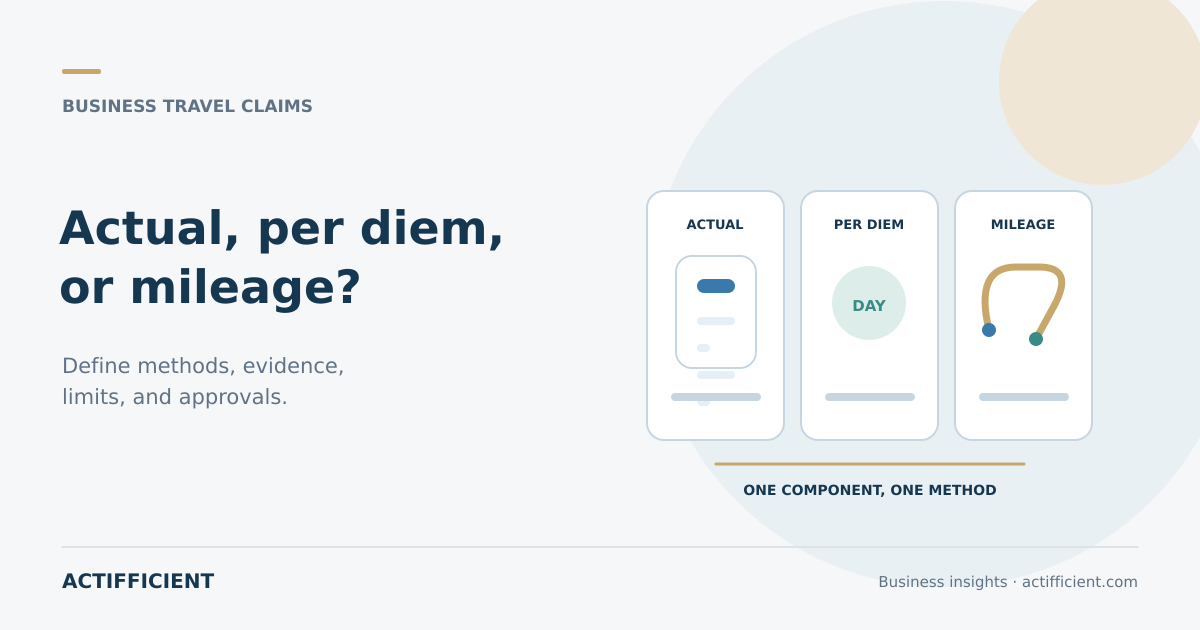
One trip can use several methods, but each component needs a boundary. A hotel may use actual cost, meals may use per diem, and a personal vehicle may use distance. An employee should not claim actual meals when the same component is already covered by a daily allowance unless an approved exception applies.
Good travel cost control starts with policy design rather than only checking submissions afterward. A simple table can define the category, reimbursement method, evidence, limit, approver, and exception path.
Match evidence to the claim type
Business travel receipts are one form of evidence, but not the only one. A travel authorization, customer invitation, ticket, hotel document, route record, mileage log, or exception approval may also support the business purpose.
Avoid asking employees for the same information several times when it already exists in an integrated system. At the same time, speed should not remove necessary review. The objective is sufficient and relevant evidence, not the largest possible number of attachments.
Design approval around value and risk
Travel claim approval can vary by value, category, project, destination, or policy exception. Routine claims within policy may require a direct manager, while higher values or exceptions need another review.
Too many approval stages can delay every submission without improving control. A process with no clear owner creates a different problem because finance has to guess who is responsible. Set expectations for submission, review, correction, and reimbursement timing.
Use technology to apply the policy
Reimbursement software can support categories, per diem rates, distance rates, approval routes, status visibility, and policy checks, depending on system capabilities. Configuration should reflect company rules and be tested with realistic travel scenarios.
For employee spending management, reporting may also separate claims by project, department, customer, or cost center. Organized data helps management identify patterns without treating every difference as misconduct.
Actifficient helps businesses assess policy, approval, and reimbursement system requirements through its business solution portfolio. If your organization wants to organize these three travel methods, contact Actifficient for a consultation. Bring sample policies, rates, trip types, and approval routes so the requirements can be mapped practically.