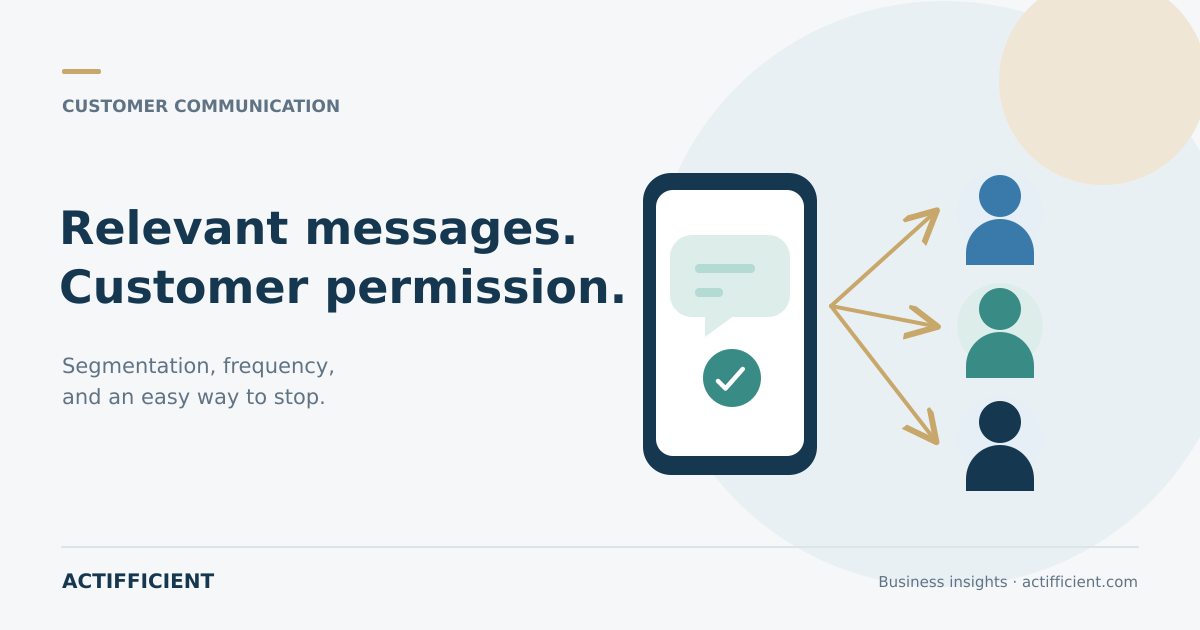
Most people have received a promotion that arrived without context, had little to do with their needs, and appeared again a few days later. The sender may have wanted to generate sales, but the recipient experienced an interruption. The message was ignored, an unsubscribe request followed, or the business number was blocked.
The problem is not simply that a company used WhatsApp. The real questions are who received the message, why they received it, and whether the content was genuinely relevant. A WhatsApp broadcast for business should help customers receive information they chose, not move careless mass messaging into a more personal channel.
When a company uses the WhatsApp Business API, broadcasting needs to be treated as a responsible communication process. Consent must be recorded, message categories need to be understood, suitable templates are required, and requests to stop must be honored. The following approach helps a business make its campaigns more useful to customers.
Begin with clear permission, not a stored phone number
A phone number collected during a purchase does not automatically mean that the customer wants every future promotion. People should understand what they will receive and actively agree to it.
A clear customer opt in request explains the value and the message categories. Customers might choose order updates, service reminders, product information, or relevant offers. More specific choices help a business communicate according to the recipient's expectations.
Record where consent was collected, when it was given, which category was selected, and what language was displayed. This information should be available when the team prepares a recipient list. A person who agreed only to order updates should not automatically enter a promotional audience.
Permission must also include customer control. People need a simple way to update their preferences or stop receiving a category of messages.
Divide the audience by genuine customer needs
Sending one message to an entire database may feel efficient, but the content will rarely be relevant to everyone. A new lead, an active customer, a recent buyer, and a person who has been inactive for a year have different contexts.
Use customer segmentation based on information that serves the communication goal. Useful examples include lifecycle stage, product interest, branch location, last transaction date, and service type. Avoid using sensitive data that the message does not require.
For example, a workplace supply store does not need to send a laptop bag offer to every corporate buyer. A customer who previously explored that category may find a stock update useful, while a buyer focused on bulk stationery may not.
A WhatsApp CRM can connect conversation history, preferences, lead status, and customer activity. The quality of the segment still depends on clean data and agreed rules. Software cannot make an unclear audience relevant by itself.
Give every message one clear purpose
A message that tries to explain too many things leaves the recipient unsure what to do. Choose one primary goal, such as confirming a schedule, sharing a status update, introducing a service, or presenting a relevant offer.
Effective WhatsApp message templates provide context, value, and an understandable next action. Identify the business, explain why the person received the message, and state what they can do next.
Here is a simple educational example:
Hello Rina, you previously requested information about managing consultation schedules. We have prepared a short guide to reducing missed appointments. Reply INFO if you would like to receive it. If you no longer want similar updates, reply STOP.
This is easier to understand than a long promotion containing several products, links, and calls to action. The recipient can see the context and make a choice.
Personalization means more than adding a first name
Placing a name at the beginning does not automatically create a personal experience. Personalized WhatsApp messages reflect what is reasonably known about the customer's needs and relationship with the business.
A customer who just completed a purchase may need delivery information or a usage guide. A prospect who requested a demonstration may need scheduling options. A returning customer can receive an update related to a category they previously explored.
Check that every personalized field is available and accurate. An incorrect product, branch, or order status damages trust. Prepare a safe fallback when a field is empty so the customer does not receive an awkward greeting or incomplete sentence.
In a responsible WhatsApp marketing strategy, relevance matters more than the number of variables inserted. Use only enough information to help a recipient understand why the message is useful.
Set sensible timing and frequency rules
There is no single frequency that fits every company. A daily essentials retailer and an annual service provider have very different customer relationships. The important point is not to send a message merely because a contact list exists.
Set an internal limit for how many messages each person can receive during a chosen period. Review other recent communication before launching a new WhatsApp marketing campaign. A customer with an unresolved complaint should not immediately receive an unrelated promotion.
Choose a reasonable delivery time based on the customer context and message purpose. An appointment reminder has a different timing requirement from a product offer. Test with a smaller group before expanding to the full segment.
Watch for changes in response. If stop requests rise or replies show that the message is irrelevant, do not only rewrite the headline. Review the segment, consent source, message value, and frequency.
Make the stop option easy to use
An essential part of how to avoid WhatsApp spam is giving recipients control. Instructions for stopping messages should be clear and simple. Do not hide them inside a long paragraph.
When someone asks to stop, update the preference promptly and make sure it affects the next recipient list. If a business sends several categories, explain whether the request stops all promotional communication or only one category.
The suppression list should connect to the campaign data source. Do not depend on one employee remembering which numbers to remove manually. The team also needs a process for customers who want to change preferences while continuing to receive necessary service communication.
Measure quality, not only sending volume
The number of messages sent does not show whether communication was useful. Review delivery, reads when available, replies, the intended next action, and requests to stop.
Compare results by segment and message purpose. A smaller audience with a clear need may produce more useful learning than a large unfocused list. Record the questions people ask after delivery, since their replies can reveal missing information.
Do not judge a campaign only by immediate sales. A reminder that reduces repeated questions, a status update that gives customers confidence, or an educational message that helps them make a decision can also serve a valid business purpose.
Prepare the team for customer replies
A broadcast is not truly one way communication. Once customers reply, the company needs a clear route for ownership and access to the relevant context.
Use CRM history and a shared inbox so agents do not ask people to repeat the entire story. Prepare response categories and escalation paths for questions that need sales, customer service, or operations.
Before sending, confirm five points. Recipients gave appropriate permission, the segment is relevant, the message has one purpose, the stop option is visible, and the team is ready to respond. This checklist is more valuable than pursuing database size alone.
A good broadcast does not feel like a company is talking to everyone at once. It feels relevant because it reaches the right group, at a reasonable time, with clear context. That is the foundation of customer communication that supports relationships and keeps team workflows organized.
Want to bring broadcasting, segmentation, conversation history, and follow through into a more structured workflow? Explore Actifficient WhatsApp Business API and omnichannel CRM, then contact Actifficient to discuss contact volume, message types, consent handling, and your team's operational needs.