A customer shared a WhatsApp number while buying a product. Six months later, the customer receives an offer that is no longer relevant and asks for the messages to stop. The service team sees the reply, but a separate campaign list continues to include the same number.
WhatsApp customer consent needs more than a checkbox. A business should know who gave permission, when it was provided, what communication it covered, and how the customer can change that choice. A previous conversation does not automatically mean the person wants every future promotion.
Explain the communication purpose from the beginning
When collecting a number, describe the types of messages the business intends to send. Transaction updates, appointment reminders, service notices, and commercial offers serve different purposes. Customers should not have to guess whether their number will be used only for an order or also for recurring campaigns.
Good customer consent management records the source, date, channel, communication category, and wording presented when permission was requested. Consent collected through a form, checkout page, event, or agent conversation should be traceable to that source.
Separate promotions from service communication
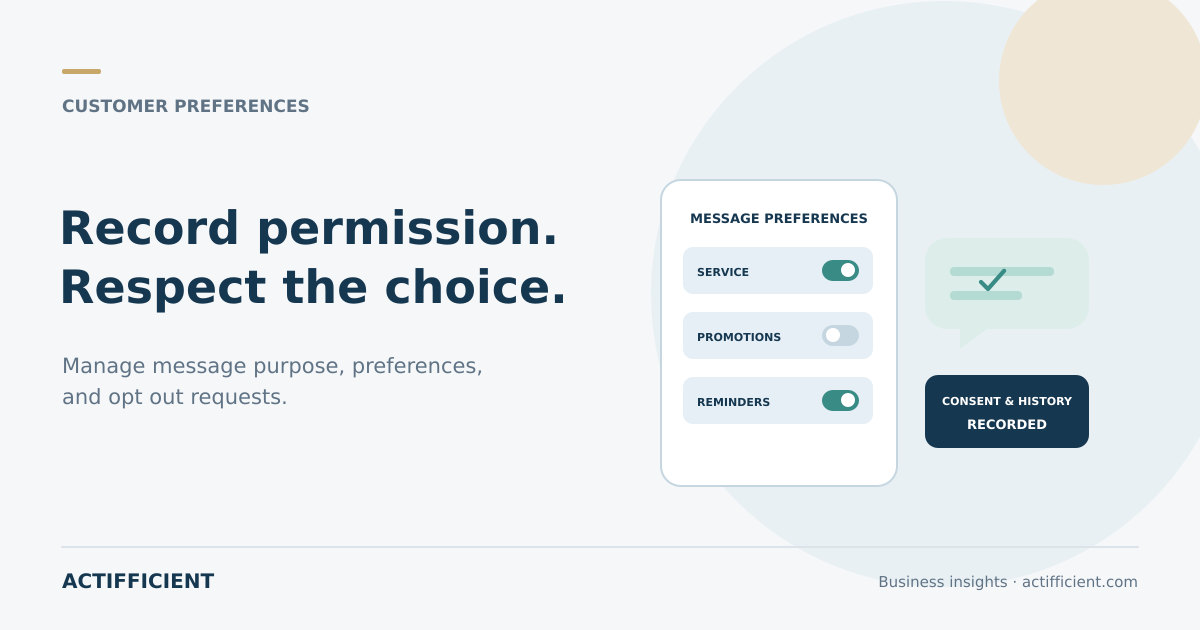
A customer who declines promotions may still need updates about an active order or service. For that reason, customer communication preferences should be more specific than a single choice for all messages.
Businesses can offer understandable categories, such as transaction information, appointment reminders, product news, or special offers. Clear categories make it easier to respect the customer's choice without interrupting communication required to deliver an existing service.
Make stopping messages straightforward
A WhatsApp opt out request should not create another burden for the customer. Use a simple instruction or an opt out button when the available feature supports it. Do not require a customer to explain the decision or contact a different channel just to stop promotional messages.
Once the request is received, unsubscribe list management should prevent the number from returning to future promotional segments. Send a short confirmation that the preference has been recorded. If transaction updates can still be sent, explain that distinction in plain language.
Synchronize preferences across teams and channels
Opt out failures often happen because information is stored in several places. An agent updates a conversation, but the campaign spreadsheet remains unchanged. A branch has its own list, while the central team uses a separate database.
An omnichannel CRM can help maintain consent and preference status on a shared customer profile, depending on the selected system and integrations. Marketing, sales, and service teams should see the current choice before initiating communication.
Review the audience before every campaign
Before sending WhatsApp promotional messages, confirm that each recipient has the appropriate consent, still belongs to the relevant segment, and has not asked to stop. Old numbers, duplicates, inactive customers, and contacts without a clear permission source require review.
Large volume should not replace audience checks. A smaller and better targeted campaign is easier to assess. Teams can review responses, complaints, and opt out rates to determine whether frequency, timing, or content needs improvement.
Use templates responsibly
The WhatsApp Business API uses message categories and templates under the platform's current requirements. Approved WhatsApp message templates are not blanket permission to contact every number. The business still needs to match the message purpose with the customer's consent and relationship context.
Avoid presenting a promotion as a service notification. The purpose, offer, and requested action should be understandable. When an offer has a genuine deadline, state it clearly without creating misleading pressure.
Keep evidence of preference changes
For compliant customer communication, retain a history of when permission was granted, updated, or withdrawn. Records should identify the source and processing time. Limit access so that communication status cannot be changed without an authorized reason.
Review contacts with missing permission sources, unprocessed opt out requests, and integration failures on a regular basis. A business should not wait for another complaint before repairing a broken workflow.
Treat opt outs as useful feedback
The number of people leaving a promotional list can reveal communication quality. Review whether the frequency was too high, the audience was poorly selected, the content lacked relevance, or the original expectation was unclear.
Actifficient helps businesses assess WhatsApp Business API requirements, consent workflows, segmentation, and data integration through its customer communication solution portfolio. If your team wants to map the process from permission capture to opt out handling, contact Actifficient for a consultation. Bring examples of forms, message categories, contact sources, and data update workflows to make the assessment more useful.